
Start with how the seat will be used and cleaned
A fabric or leather that suits a guest-room accent chair may not suit a breakfast area, lobby or frequently moved banquet seat. Begin with the furniture item, location, expected contact, cleaning method, replacement strategy and any project evidence requirement. GEORGE Group can discuss upholstery options, while the actual material range, construction, colour batch, performance documents and destination suitability are confirmed for the specific project.
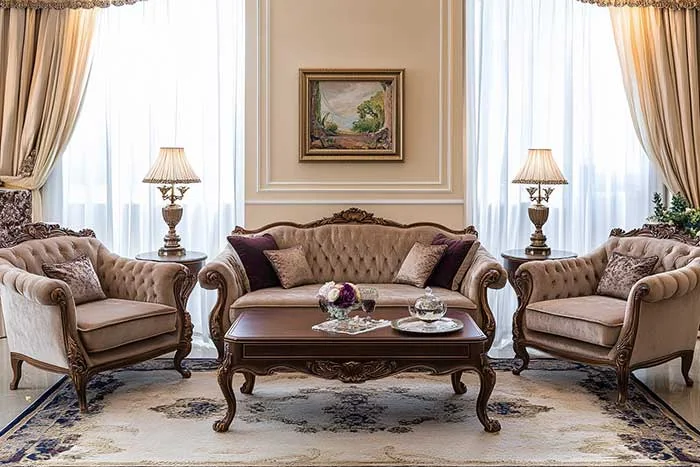
Build an upholstery brief before choosing from swatches
| Decision | Information to record |
|---|---|
| Location and intensity | Guest room or public area, seat type, frequency of use, likely abrasion, snagging or impact |
| Material identity | Fabric composition or leather description, backing, colour, finish, supplier reference and batch |
| Cleaning | Expected spills, approved products, extraction or wipe method, drying, stain treatment and operator limits |
| Construction | Cushion build-up, seam, piping, tufting, pattern direction, matched areas, removable covers and replacement access |
| Evidence | Required abrasion, flammability, colourfastness, emissions or chemical documentation for the actual application |
| Replacement | Spare material, batch retention, repeat availability, item-level reupholstery and acceptable future variation |
Compare material families without turning general traits into guarantees
- Woven or knitted fabrics: compare texture, pattern, seam behaviour, cleanability and specified evidence. Fibre names alone do not establish commercial durability or stain resistance.
- Natural leather: define the leather type, surface finish, natural markings, colour range, care and repair expectations. A small swatch may not show the variation across a full hide.
- Coated upholstery materials: identify the construction, finish, cleaner compatibility and required ageing or use evidence. Generic labels should not replace the supplier’s current technical data.
Check how the upholstery works with foam, interliners, adhesives, timber or metal frame and decorative details. A compliant cover material does not by itself establish the performance of the complete seating assembly.
Approve colour, construction and evidence as separate records
Label the swatch with the project, item, zone, supplier reference, colour, batch, date and decision. For patterned material, review the repeat, direction and placement on the actual furniture drawing. For leather or visibly variable materials, review an agreed range or production batch where necessary. A photograph can support remote review but should not be the only colour standard.
If fire, abrasion, emissions, colourfastness or other results are required, state the test method, threshold, assembly or material covered, report date and accepting authority. Do not infer a result from the appearance of a hotel scene or apply one report to untested alternatives.
Send the seating schedule, drawings, quantities, locations, design references, cleaning practices, replacement expectations, required tests, destination and sample approval date. Mark any standard still awaiting the operator, brand or local consultant.