
Specify the complete wood finish build-up
“Walnut finish” can describe an appearance without telling the buyer what is underneath it. For hotel furniture, separate the structural or panel substrate, the visible solid wood, veneer or decorative layer, the edge treatment and the coating system. GEORGE Group can discuss configured wood and veneer finishes, but the available construction, material identity, sample and applicable documents must be confirmed for the project.
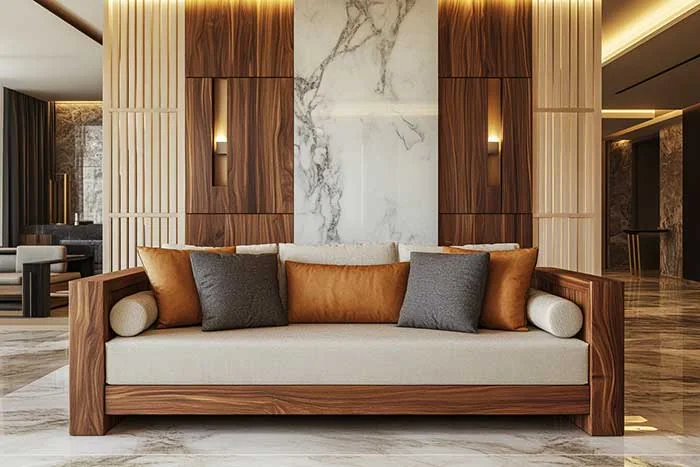
Record five linked decisions for every visible wood surface
| Decision | Information to approve |
|---|---|
| Substrate or structure | Material, thickness or build-up, intended use, fixing and any moisture or load condition |
| Visible layer | Solid wood, veneer or decorative finish identity; cut or pattern; face grade; application area |
| Grain and layout | Direction, book or slip match where relevant, sequence, panel breaks and relationship across adjacent pieces |
| Edges and joints | Edge material, profile, corner treatment, reveal, joint location and expected visual continuity |
| Coating and colour | Stain or paint reference, sheen, texture, approved sample, cleaning method and repair expectation |
Names such as oak, walnut or ash are not enough to establish source, grade, cut, colour or construction. State which attributes are fixed and which may be proposed as an approved alternative.
Approve natural variation instead of promising exact sameness
Wood and veneer can vary in tone, grain and figure. Review a representative range rather than one ideal chip. For a large repeated package, agree whether batch panels, a larger control board or a first-production piece will be reviewed. Record the lighting in which colour is approved and the permitted relationship between adjacent panels.
Use item and finish codes to connect the approved sample with each drawing. If a finish moves across casegoods, wall panels or seating frames, confirm whether the same substrate and coating process are suitable for every use. An appearance match does not guarantee identical ageing, touch or repair behaviour across different materials.
Resolve edges, cleaning and replacement before production
Identify wet-cleaning areas, food or beverage exposure, direct sun, repeated luggage contact, heat sources and likely impact points. Ask how edges, joints, hardware cut-outs and exposed end grain will be treated. Confirm the proposed cleaning products and whether local maintenance teams can repair or replace the finish without changing the whole room family.
Where sourcing, emissions, fire or other documents are required, identify the exact material or assembly, current test or certificate, destination rule and acceptance authority. GEORGE has group-level certificates, but the applicability of any document to a specific substrate, veneer, coating and product must be checked after the configuration is known.
Send the furniture and room schedules, drawings, desired species or appearance, colour and sheen references, exposure and cleaning conditions, sample level, required evidence and decision date.